










ORGANIZERS
 Onshirin Regional Public Organization |
 Research Institute for Humanity and Nature |
 International Association for the Study of the Commons |
REGISTRATION OFFICE
c/o Convention Linkage, Inc.
Sanbancho KS Bldg.
2 Sanbancho, Chiyoda-ku
Tokyo 102-0075, Japan
Phone: +81-3-3263-8695
Fax: +81-3-3263-8693
Email: info@iasc2013.org

POST - CONFERENCE FIELD TRIPS
PT1: Beyond Natural and Human Disaster on the Commons:
Recovery of fishing and community commons from the 3/11/11 tsunami on the coast of northeast Japan and History of the Lost Commons in Kotsunagi, IWATE Prefecture
Duration: 3 days (June 8-10)
Cost: ¥23,000 (The bullet train fee from Morioka for Tokyo and the food expenses are NOT included.)
Capacity: 40 persons
Coordinator: Keizo Hayasaka (Iwate Kotsunagi no Kai)
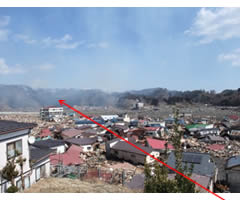
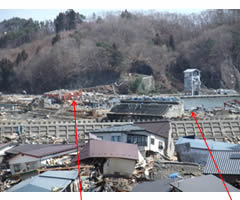
This three-day trip will include visiting commons related to fisheries, agriculture, and forestry in northeastern Japan. We will begin with the inspiring story of the recovery of coastal fishery cooperative after the disastrous tsunami of 2011, and continue to examine cultivated agriculture on a farm created by confiscating and consolidating commons (famous throughout Japan for Koiwai butter and cheese), and finally conclude with an investigation into one of Japan’s most famous disputes over the commons, the four-generation struggle by the commoners of Kotsunagi in Iwate Prefecture. The trip begins on June 8 when we will head to the northeastern coastal region of Japan affected by the tsunami to see how the social capital generated by a long history of commons activity has contributed to recovery. It is important to remember that coastal fisheries in Japan have been the property of coastal fishing villages for centuries, and in modern law these robust and valuable rights belong to fishing cooperatives. We will start in the Taro district of Miyako City, which is known for seaweed, scallop and abalone aquaculture. Here the highest seawall embankment in Japan (at 10 meters) was engulfed by the tsunami in one fell swoop. Even though most homes were destroyed, the community has led remarkable efforts at revival, beginning with the reconstruction of the fishery cooperative, with the support of the local Iwate Prefectural branch of Japan’s Livelihood Cooperative, a nationwide movement that for decades has spearheaded local production and direct sales of safe food and products that bypass the standard wholesale and retail channels. The Taro fishing cooperative has been very successful in creating a new local product, Masaki Wakame (seaweed). We will spend the night at the site in Miyako City. On June 9, we will visit the Omoe district of Miyako City to examine a very successful fishery cooperative that uses private fixed nets to work the rich fishing grounds of Japan’s spectacularly beautiful Sanriku coast (which also comprises the Rikuchū Coastal National Park). We will spend the night in Morioka. On June 10 we head to Iwate University to visit the Kotsunagi library, a collection of documents related to the commons dispute at Kotsunagi, one of the most famous cases in Japan, lasting four generations and including very important litigation. (A feature-length film on Kotsunagi will be shown during the Kitafuji conference). We will enjoy a delicious lunch at the Koiwai Farm, which exists on land that was formerly an iriai commons that was confiscated, sold off to private companies, and re-established as a large farm, subsequently becoming a popular tourist destination. The name Koiwai is actually an amalgam taken from the initial Chinese character in the name of each of the presidents of the companies that ended up with the land in the Meiji period, so the name is an unintended memorial to this theft and corrupt transfer of the commons. The program will end on the afternoon of June 10th at Morioka, and participants may return to Tokyo via shinkansen bullet train. Those who are interested can spend an additional night with the group and join Professor McKean on a trip to the actual mountain commons of Kotsunagi on June 11, and make their return trip by shinkansen superexpress bullet train to Tokyo on June 12 (with an additional charge for the additional night’s accommodation).
* Foreign visitors can purchase the JR EAST PASS SPECIAL for travel on
Shinkansen lines between Morioka and Tokyo at a discounted price.
* The JR EAST PASS SPECIAL is valid for the 10-day period from the day of
purchase; during this period, you can use it for railway trips within the area managed by JR East Japan for any 3 days of your choice. The price is 15,000 yen.
* The participants of the field trips can use the JR EAST PASS SPECIAL
received on June 1 or later for the trips from Tokyo to Morioka on June 8, and from Morioka to Tokyo on June 10 (those who wish can also use the pass on June 11; in this case, the pass must be received on June 2 or later). For comparison, the regular fare is about 28,000 yen.
* For details about purchasing and receiving please refer to “How to get JR EAST PASS SPECIAL”.
* Participants are required to reserve a seat for Tohoku Shinkansen Line "Hayate/Komachi No. 21" scheduled to depart from Tokyo at 9:56am and to arrive at Morioka at 12:22 when you purchase the JR EAST PASS Special.
 |
 |
 |
|---|---|---|
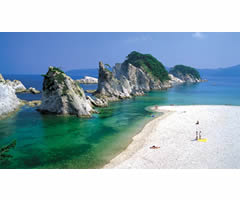
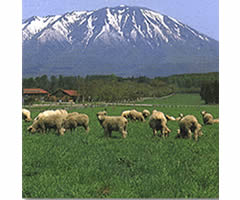
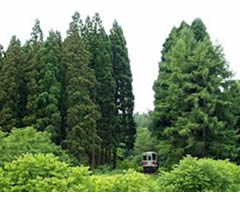
| Rikuchū coast near Miyako | Sheep at Koiwai Farm | Forests near the lost commons of Kotsunagi |
 |
 |
 |
| Taro fishing cooperative main office (large building in distance) (March 2011) |
Fish processing plant-- Fish market in March 2011 (owned by the Taro fishing cooperative) |
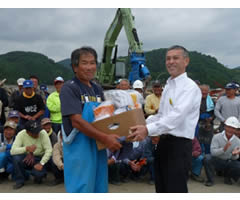
Gift from Iwate Livelihood Cooperative (Seikyō) to Fishing Cooperative (November 2011) |
 |
 |
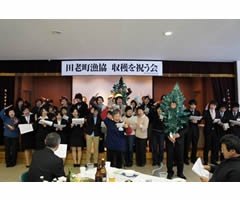 |
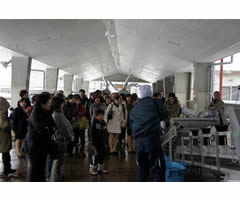
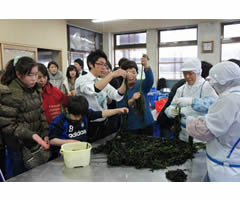
| The Taro Fishing Cooperative inspects and celebrates the first harvest after the tsunami (March 2012) | Inspection of the first harvest of the new Masaki Wakame (seaweed) | Celebration of renewed harvests with members of the Taro Fishing Cooperative and the Iwate Livelihood Cooperative. |
 |
 |
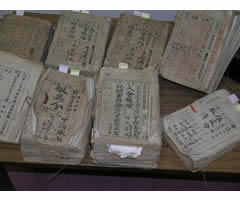 |
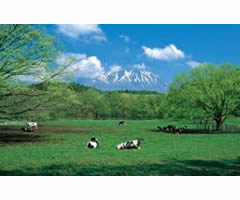
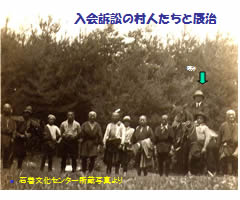
| Cattle grazing at Koiwai farm | Lawyer Tatsuji Fuse (on horseback) with Kotsunagi plaintiffs in 1935 | Legal documents related to the Kotsunagi dispute over commons (iriai) rights. |
 |
||
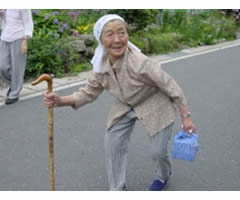
| A Kotsunagi plaintiff today. Photo by Mieko Murabayashi. |
PT2: New Uses and New Commons in Revitalizing Rural areas: The Echigo-Tsumari Art Field of NIIGATA Prefecture as a catalyst for social capital and economic recovery (3 days, June 8-10). Cost ¥55,000, Capacity 25 persons (minimum number of participants 10) . Coordinator: Aiichiro Mogi (Keio Academic Enterprise)
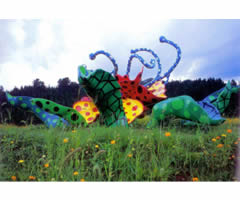
This trip will go by bus from Kitafuji directly north, crossing through typical scenery of the Japan Alps toward Niigata Prefecture, site of one of the largest art festivals in the world, the Echigo-Tsumari Art Triennale (held once every three years since 2000, with additional events every year). This festival is an attempt to reveal existing assets of the region using mostly modern art (both permanent and temporary exhibits installed in schools, housing areas, and right on top of agricultural fields), to rediscover and re-invent regional values, and to revitalize the region. In addition to the classic agricultural and forested iriai commons found all over Japan, the region of Echigo made extensive use of warichi, or rotating use rights to agricultural fields among farming households in the village. Thus in the one third of Japan that also practiced warichi, the cultivated land was also basically a village commons, available for use and re-use to benefit the whole community. But like many rural areas in Japan, this region also has the problems of declining and aging population as young people move to urban areas and take economic potential with them. The art festival is both an attempt to find new economic potential in existing resources, and to create community and understanding between rural residents and urban visitors. The art festival essentially uses existing commons in new ways but also creates a new cultural commons, from the open-air exhibits themselves to the joy and conviviality inherent in shared enjoyment of art. This new cultural space can be temporary or perpetual, and involves a vital exchange of benefits. City-dwellers have the opportunity to enjoy open space and nature in the countryside but also to know its harsh realities. Economic revival allows villagers, particularly the elderly, to receive improved access to basic services, which are difficult to supply in remote areas, particularly those with heavy snowfall in the winters. And villagers also benefit, through the process of producing art, from communicating and collaborating with artists, supporters, and even visiting tourists. Not just an exchange of what both urban and rural Japan miss, Echigo-Tsumari also involves recognition of indispensable shared values, trust-building, mutual respect, and a shared vision of humans as part of nature. Participating artists are from Japan and the rest of the world, including such renowned artists as Christian Boltansky, Marina Abramović, Ilya & Emilia Kabakov, Yayoi Kusama, and others. You will have rare opportunities to observe the creation of such values on site. ITINERARY: On June 8 (day 1), we will travel from Kitafuji by 3-hour bus trip directly to Niigata to reach the Echigo-Tsumari art field, mostly in the city of Tokamachi. We will visit 2-3 art projects on site and listen to lectures about various projects and schemes. We will stay at the homestead of this activity, converted from an abandoned elementary school. On June 9 (day 2) we will visit 4 or 5 art projects, and meet with villagers, artists, and supporters including non-profit organizations and “kohebi” [little snakes], the endearing local term for young supporters from the cities. We will again stay at the converted school and enjoy a nearby hot spring. On June 10 (day 3) we will visit 2-3 projects and then return to Tokyo by shinkansen bullet train.
 |
 |
 |
|---|---|---|
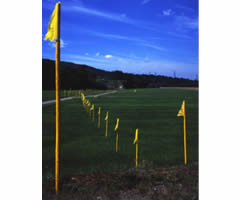
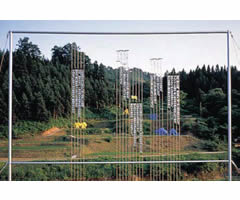
| Yukihisa Isobe: following the early course of the Shinano River through the Echigo-Tsumari Art Field. | Ilya & Emilia Kabakov: The Rice Field, In Echigo- Tsumari Art Field, Niigata Prefecture. Photo by ANZAI. | Yayoi Kusama, at Echigo-Tsumari Art Field. |
 |
||
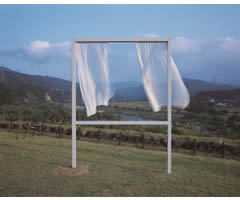
| Akiko Utsumi: For Lots of Lost Windows (at Echigo-Tsumari Art Field). Photo by H. Kuratani. |
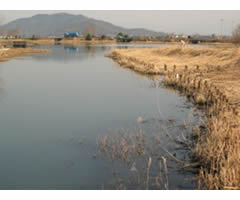
PT3: BIWA-KO -- Governing a complex watershed: Lessons from the Lake Biwa - Yodo River watershed in SHIGA, KYOTO, and OSAKA Prefectures (2 days, June 8-9). Coordinator Tomohiko OHNO (Hannan University) Cost: ¥33,000, capacity 20 persons.
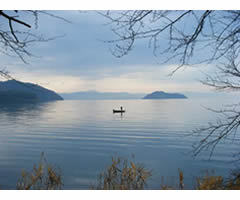
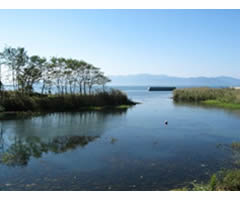
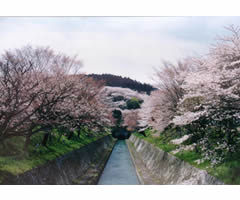
This two-day trip (8th - 9th June 2013) will go from Kitafuji to Shiga and Kyoto Prefectures. The main purpose of this post-conference field trip is to understand the complexity of multi-scale watershed governance, ranging from local water commons to water management efforts at the scale of the whole watershed. Lake Biwa is the largest lake in Japan, one of the oldest lakes in the world (it is of tectonic origin), an area rich in biodiversity, and a crucial source of freshwater and major stopping point for migratory birds. It has been a quasi-national park since 1950, a wildlife sanctuary since 1971, and a designated wetland under the Ramsar Convention since 1993. It is the source of the Yodo River that flows through southern Kyoto and goes on to Osaka. Because of its importance in transportation, as a source of natural products, and in managing water for irrigation in rice production, Lake Biwa has been the focal point of military and economic competition for centuries. The decisive battle of Sekigahara, which unified Japan in 1600 and created the Tokugawa shogunate, was fought nearby. Many millions depend on this watershed – more than 10 million people in the Kyoto-Osaka area live in this watershed and over 16 million drink its water. The current governor of Shiga Prefecture, Yukiko Kada (who is also the founder of a new political party, Japan’s Future), began her political career as an environmental researcher and activist concerned with clean water and water commons, at which time she also joined IASC/IASCP.
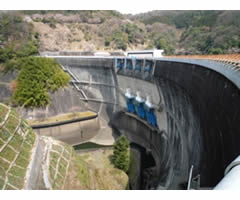
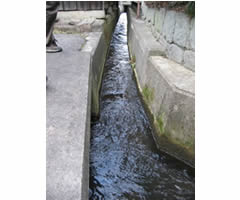
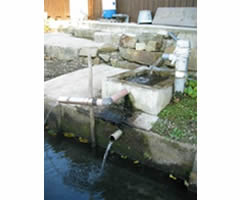
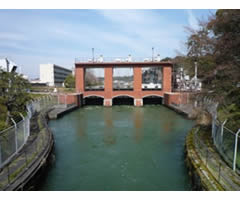
On June 8, we will travel from Kitafuji to Shiga, and we will begin with a visit the Lake Biwa Museum to get an overview about interactions between the lake and people’s daily lives. Then we will visit some villages along the shores of Lake Biwa to see traditional practices for managing and using water and for fisheries in freshwater lakes and rivers. Through exchanges with local people, participants will also learn about changes in the communities and their surrounding environment. We will spend the night of June 8th in the Lake Biwa area in Kyoto. Then, after looking at local communities, we will move up to larger-scale issues. On June 9th, we will visit Setagawa wier, Amagase dam, and Lake Biwa canal, which are the modern technological measures now used to control the movement of water in the Lake Biwa-Yodo River watershed and draw it into Kyoto and Osaka. We will learn about efforts to manage the water as well as about the negative effects of such large-scale technologies on (and through and over) local commons, creating sudden large-scale changes that are unnecessarily damaging in some zones. During the trip we will have a chance to enjoy traditional local fish dishes along Lake Biwa, and the controversial funazushi will be available too!
Please note that this field trip is a one-way trip from Kitafuji to Kyoto. Although we will not return as a group to Kitafuji or Tokyo, transportation in the Kyoto-Osaka area is very convenient, and it is easy to take the bullet train back from Kyoto to Tokyo, or to depart from Japan out of Kansai International Airport (KIX).
 |
 |
 |
|---|---|---|
 |
 |
 |
 |
 |
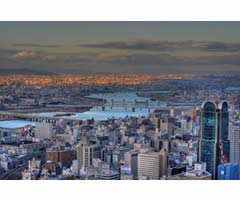 |
| The Yodo River flows through Osaka |
Also, please note that the accommodation for the night of June 8th is a traditional Japanese style hotel, which has a Japanese-style shared room (sleeping on futon mattresses with blankets on tatami floor.), no internet access, communal restroom and communal bath. Shared facilities will be separated by designated time for men and women.
↓ Click the link below to download the PDF file for the travel plan. ↓
© 2012 Overall Organizing Committee of IASC2013